
 SEARCH

How to Hire a Link Building Agency: The Complete Decision-Making Guide

January 21st, 2026
posted by Radomir Basta to hire a link building agency, how to hire a link building agency, link building, Link Building Agency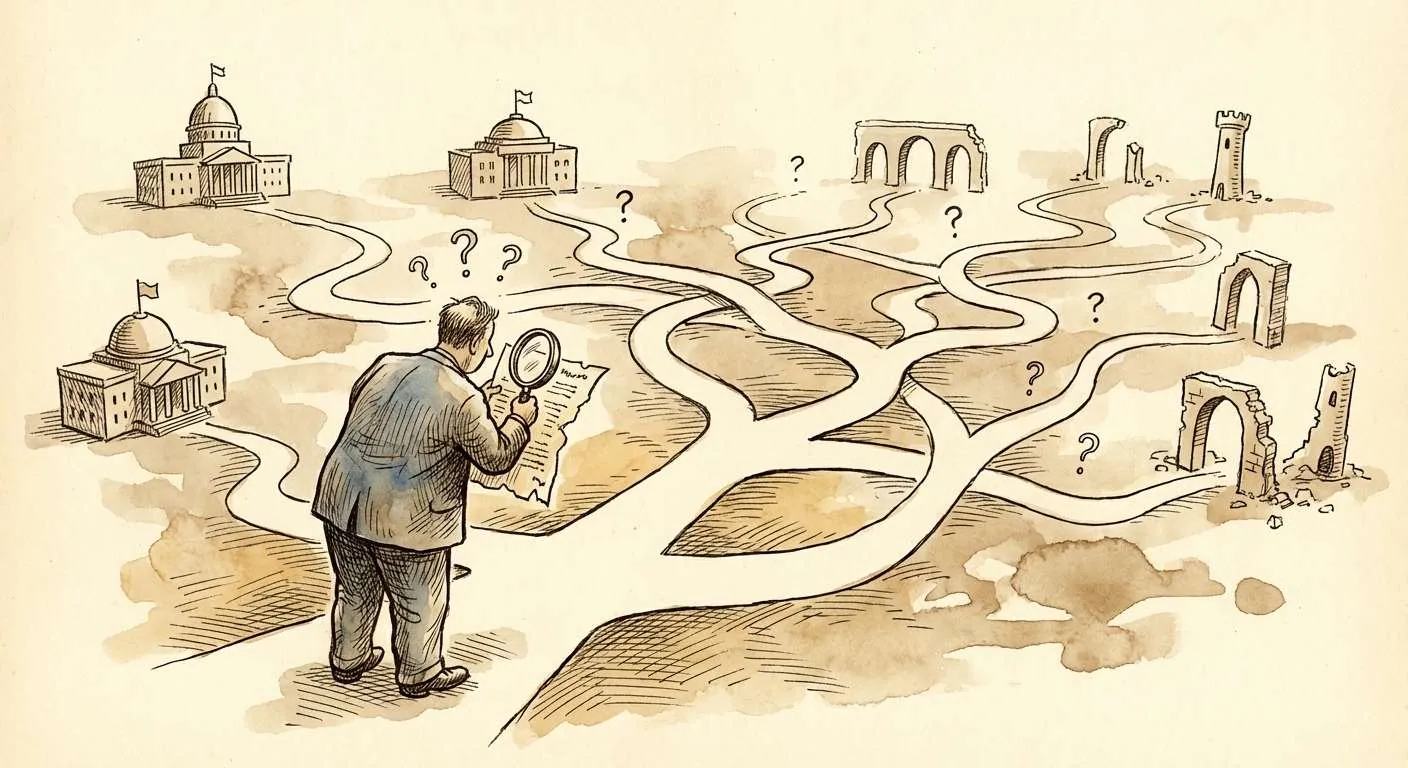
Hiring a link building agency is probably the most challenging of all SEO sub-branches. In most industries, highly specialized agencies are usually the smart way to go.
But in SEO, in particular, this can be a trap.
Unless the client has an in-house team or external consultant(s) handling technical and on-page optimization, content creation, and website publishing, focusing the entire budget on link building can result in lower or negative ROI.
Without those capabilities or a previously well-optimized website. Clients who focus only on link building risk investing significant resources in links that could be of great quality and then not getting the maximum potential those links can deliver.
Usually, if the website is not fully optimized and prepared, it will not leverage the newly received, so-called link juice or SEO authority that new links provide.
Decision Paralysis by Overchoice
There are link building agencies, and then there are link building agencies.
Selection is extensive, but the risk of buyer’s remorse is real and statistically significant/probable.
Fortunately for you, for the first 7 of the current 14 years, Four Dots was a highly specialized white-label link building outreach agency that, on a monthly basis, built 1,500 to 2,000 manual guest posts per month.
We worked with some of the most reputable SEO agencies on a global scale, and with some whose loud public stance was that link building is dead, do XY, and then email “Hey Four Dots, we need 300 more backlinks.
All in all, we know a thing or two about link-building.
Since we are nice guys, we’ll try to clear some of the dilemmas you probably have, which should help you select a good provider, or at least lower the chance of getting that pesky buyer’s remorse.
This guide is built as a practical Q&A.
Steal the questions.
Use them on every agency you talk to.
Watch them sweat bullets :)
How to use this guide
For each question, you will get:
- Why it matters – what this reveals about risk and outcomes
- What a strong answer sounds like – the signals you want to hear
- Red flags – the signals you should not ignore
- Our answer – how we handle it at Four Dots
The point is not to pick us.
The point is to help you pick the right partner.
If we earn your trust along the way, great.
Before the first call: get clear on what you actually need
1. “What outcome are we buying with link building?”
Why it matters
Link building is not one thing.
Some teams buy links to lift a handful of money pages.
Others need authority to compete in brutal SERPs.
Some want brand mentions and referral traffic.
If you and the agency are not solving the same problem, you will both be frustrated.
What a strong answer sounds like
- They ask what pages matter – and why
- They ask what the competition looks like
- They talk about time horizons in months, not days
- They define success in business terms, not only SEO metrics
Red flags
- They quote you before they ask you anything
- They only talk DR and number of links
- They promise timelines that sound like wishful thinking
Our answer
We start with your business goal, your target pages, and the SERPs that matter.
We look at baseline link profile, current organic trend, and the competitors you are trying to beat.
Then we map link building to a plan that makes sense for your budget and timeline.
Part 1: Evaluating link building methods
2. “What types of links do you actually build?”
Why it matters
Agencies use the same words for very different products.
“Guest post” can mean a real niche site with standards.
Or a site that publishes anything for a fee.
You want to understand what you are buying before you buy it.
What a strong answer sounds like
- Clear categories of links, with clear specs
- Relevance explained, not hand waved
- A process for vetting sites beyond surface metrics
Red flags
- “We can get you links on any DR you want” with no discussion of relevance
- They hide the sites until after you pay
- No mention of traffic quality or editorial standards
Our answer
We usually work in three buckets, depending on your goals:
- Standard quality placements – good for volume in lighter competition
- High quality placements – the usual sweet spot for authority transfer plus budget control
- Editorial placements – earned mentions through real outreach and relationships
Every placement goes through manual review.
Metrics are a starting point.
Not the finish line.
3. “Are you using PBNs, link farms, or other high risk techniques?”
Why it matters
If you have been burned before, this is probably why.
Risky techniques can create short term movement.
Then the floor drops out.
You want an agency whose default is long-term survivability.
What a strong answer sounds like
- A direct answer, with definitions
- Clear boundaries on what they will not do
- A plan for handling historical toxic links, if they exist
Red flags
- Dodging the question
- “Everyone does it” or “Google cannot detect it”
- A sales pitch about speed instead of risk
Our answer
We do not use PBNs.
We do not run link farms.
We do not do manipulative exchanges or unnatural anchor schemes.
We also acknowledge reality.
Links can disappear.
Publishers change policies.
So we build for durability, then monitor what happens over time.
4. “How do you find link opportunities?”
Why it matters
The quality of your links is capped by the quality of the sites they can access.
Many agencies recycle the same tired lists.
Those placements look fine on paper and underperform in practice.
What a strong answer sounds like
- A repeatable prospecting process
- Filters that match your niche and brand standards
- Human review before outreach
Red flags
- “We have a database” with no explanation
- Prospecting is 100 percent automated
- They cannot explain why a site is a fit beyond DR
Our answer
We combine software with human judgment.
We built Dibz.me to surface opportunities faster.
Then senior link builders manually review targets before outreach.
5. “Do you use mass email outreach?”
Why it matters
Mass outreach burns domains.
It creates low response rates and low quality acceptance.
Good outreach is slower.
It also gets better outcomes.
What a strong answer sounds like
- Personalization is the default
- They show how they pitch and how they follow up
- They can talk about acceptance rates without sounding vague
Red flags
- Template blasts
- “We send 10,000 emails” as a flex
- They use your domain without controls
Our answer
We do manual outreach.
Real people.
Real site reviews.
Real conversations.
That limits volume.
It improves placement quality.
Part 2: Understanding their process
6. “Walk me through your process from start to finish.”
Why it matters
Link building is a production system.
If the system is weak, quality slips.
If the system is unclear, results are inconsistent.
What a strong answer sounds like
- A step by step workflow
- Clear QA checkpoints
- Clear ownership across roles
Red flags
- They cannot describe the work without buzzwords
- No review steps
- Reporting is an afterthought
Our answer
Our baseline workflow looks like this:
- Baseline and SERP analysis
- Prospecting and qualification
- Outreach and negotiation
- Content writing
- Editorial QA
- Publishing and verification
- Monitoring and reporting
7. “How do I see progress while work is happening?”
Why it matters
If you only see a spreadsheet once a month, you are buying faith.
You want visibility into activity, not only outcomes.
What a strong answer sounds like
- You can see what is in flight
- You can see what is blocked
- They can show you what they are doing before results show up
Red flags
- Reporting is only delivered at the end of the month
- They cannot show outreach status or pipeline
Our answer
We give clients access to Base.me and Reportz.io so you can see:
- Opportunities found
- Outreach status
- Content in review
- Links live
- Link health checks over time
8. “What happens when a link gets removed or changes to nofollow?”
Why it matters
This is where ROI quietly dies.
A good agency plans for churn.
A bad agency pretends it never happens.
What a strong answer sounds like
- Monitoring is built in
- Clear replacement policy
- Clear expectations on what is normal churn
Red flags
- “Our links never get removed”
- No monitoring
Our answer
We monitor links through Base.me.
If something changes, you see it.
Then we agree on the next step based on the situation.
We track link survival over time.
Across our portfolio, our audited two year link survival rate is 80.23 percent across 110,000 plus tracked links.
Part 3: Content quality
9. “Who writes the content?”
Why it matters
Your brand gets attached to this content.
It stays online.
It represents you.
You want content that a real publisher would run even if links did not exist.
What a strong answer sounds like
- Named roles and QA
- Clear minimum content standards
- Industry matching when it matters
Red flags
- Cheap offshore content with no oversight
- AI content with no human editing
- Vague claims about “quality”
Our answer
We use an in-house content team with editorial review.
We match writers to niches when the niche demands it.
We keep content useful.
Not padded.
10. “Can I review content before it publishes?”
Why it matters
Most clients do not want surprises with their name on it.
Approval workflows protect you.
What a strong answer sounds like
- Several approval options
- A system to track feedback and revisions
Red flags
- “No, we cannot share drafts”
Our answer
You can choose full approval, sample approval, or no approval.
Most teams start with full approval and relax it later.
Part 4: Track record and risk management
11. “How long have you been doing this, and what have you survived?”
Why it matters
Link building changes.
The safe line moves.
Experience is pattern recognition.
What a strong answer sounds like
- They can explain how their approach evolved
- They can talk about what they stopped doing and why
Red flags
- They rely on a tactic that only works until it does not
Our answer
Four Dots has been doing link building for 14 years.
We have seen methods rise, get abused, and die.
So we focus on placements that hold up to scrutiny.
11A. “Can you share case studies from clients in my industry?”
Why it matters
Generic case studies are easy to sell.
Relevant case studies are hard to fake.
Industry fit affects everything:
- publishers that will accept content
- what counts as a credible mention
- what link velocity is realistic
- what anchors are safe
What a strong answer sounds like
- 2 to 3 examples that match your niche or business model
- context, not only a chart
- what they tried first, what failed, what worked
- what they would do differently today
Red flags
- only screenshots with no context
- they will not show anything due to “NDA” but also provide zero anonymized detail
- case studies that are all ultra short time windows
Our answer
We can share examples by niche and goal.
If we cannot show a comparable example, we say it.
Then we propose a smaller pilot first.
11B. “What is your typical link survival rate over time?”
Why it matters
A link that disappears is not an asset.
It is a sunk cost.
A survival rate tells you two things:
- how strict their publisher selection is
- whether they monitor and fix problems
What a strong answer sounds like
- a timeframe definition, like 6 months, 12 months, 24 months
- a clear method for measuring survival
- a plan for replacements or remediation
Red flags
- “links never get removed”
- no tracking after delivery
Our answer
We track link survival in Base.me.
Across our audited portfolio, our two-year survival rate is 80.23% across 110,000+ tracked links.
12. “What do you guarantee?”
Why it matters
Nobody controls rankings.
Guarantees should cover deliverables and standards.
What a strong answer sounds like
- Deliverables, quality specs, timelines
- Clear remedy if delivery slips
Red flags
- Guaranteed rankings
- Guaranteed timeline promises with no caveats
Our answer
We do not guarantee rankings.
We guarantee deliverables and quality standards.
If we miss delivery, we extend work until it is delivered.
Part 5: Understanding pricing and value
“How do you structure your pricing?”
Why it matters
Pricing shapes behavior.
If pricing rewards volume, you get volume.
If pricing rewards quality, you get quality.
You need to know what you are paying for:
- a deliverable list
- access to a publisher network
- outreach labor
- content production
- account management
- reporting and monitoring
What a strong answer sounds like
- clear deliverables per month
- quality specs written down
- what is included vs optional
- what happens if a placement fails QA
Red flags
- mystery bundles
- “custom” pricing with no explanation
- agencies that sell only DR tiers and nothing else
Our answer
We price around deliverables and quality tiers.
We define what counts as an acceptable placement before outreach starts.
If it does not meet spec, it does not ship.
“What should I expect to pay for quality link building?”
Why it matters
If you pay bargain prices, you usually buy hidden risk.
If you pay premium prices, you should see premium proof.
What a strong answer sounds like
- they explain the cost drivers in your niche
- they separate publisher cost from service cost
- they can justify why a link costs what it costs
Red flags
- prices that are too good to be real
- no explanation of where money goes
Our answer
The market price depends on niche, geo, and editorial standards.
On calls, we explain the cost drivers and where we think spending actually moves the needle.
“What metrics should I use to evaluate link building ROI?”
Why it matters
If you track only DR, you will get pretty spreadsheets.
You might not get growth.
You need a mix of leading and lagging indicators.
What a strong answer sounds like
Leading indicators:
- relevance of placements
- indexation rate of linking pages
- link survival rate
- URL level strength trend of the linking page
Lagging indicators:
- rankings and traffic on target pages
- non brand impressions in Search Console
- assisted conversions and revenue impact
Red flags
- they refuse to talk about business metrics
- they only report link count and DR
Our answer
We report both activity and outcomes.
We also track link health, indexation, and URL level strength because that is where ROI often dies quietly.
Part 6: Advanced capabilities
“Do you offer any proprietary technology or methods?”
Why it matters
Tools do not replace expertise.
But the right tooling changes two things buyers care about:
- visibility into work in progress
- consistency of delivery
Most link building problems are not secret tactics.
They are execution and communication problems.
What a strong answer sounds like
- tools support the process, not hide it
- you can see pipeline stages, not only a final list
- they can explain what is tracked, how often, and why
Red flags
- “we have AI” with no practical details
- tooling used as an excuse to avoid transparency
- dashboards that only show vanity metrics
Our answer
Yes.
We built several SaaS tools that support how we deliver link building.
Some are used by other agencies too.
In practice, that means you can see what is happening, not just what happened.
“How do you combine manual outreach with proprietary tools?”
Why it matters
Pure automation tends to create spam.
Pure manual work can be slow and hard to scale.
The best teams use tools for speed and control, then use humans for judgment.
What a strong answer sounds like
- tools help find targets and track status
- humans qualify sites before outreach
- humans handle negotiation and editorial back and forth
- quality gates exist before any link is approved
Red flags
- they brag about huge email volume
- no human review of sites
- they cannot show you an outreach pipeline
Our answer
We use tools to discover and organize opportunities.
Then link builders review targets, run outreach, and handle negotiations.
Example of what you should be able to see:
- target approved, rejected, or needs review
- outreach started, reply received, negotiating, agreed
- content assigned, draft ready, edits, approved
- published, verified, monitored
Part 7: Risk management
“How do you handle Google algorithm updates?”
Why it matters
Many agencies only look calm when rankings go up.
A good partner stays calm when Google changes the rules.
The safest answer is not “we react fast”.
The safest answer is “we build in a way that does not panic when updates roll out”.
What a strong answer sounds like
- they explain risk boundaries
- they do not rely on tactics that need constant patching
- they monitor impact, but avoid random changes
Red flags
- a “secret method” that breaks when Google updates
- they jump from tactic to tactic every quarter
Our answer
We do not run special update playbooks because our link building is built around editorial standards and relevance.
We still monitor.
But we are not rebuilding your link profile every time SEO Twitter has a breakdown.
“What happens if my site gets penalized while working with you?”
Why it matters
This is the nightmare scenario.
You want two things:
- a fair process for finding the real cause
- a plan to recover, not finger pointing
It is also common for penalties to show up late.
A site can get hit today for work done months ago.
What a strong answer sounds like
- they do a root cause review before assigning blame
- they look at history, not only the last 30 days
- they can explain recovery steps clearly
Red flags
- instant blame, either on you or on Google
- no experience with recovery
- no willingness to help if the penalty is pre existing
Our answer
We have seen cases where a new client was hit during onboarding, before link building even started.
In those situations, we treat it as investigation work.
Our process:
- confirm whether it is a manual action or algorithmic hit
- review historical link patterns and recent changes
- identify likely triggers, often legacy links from a previous provider
- propose cleanup and risk reduction
Mini slide: what we baseline on day one to reduce panic later
Think of this as a snapshot.
It protects you.
It protects us.
It also makes root cause analysis simple if anything happens.
- Search Console access and manual actions check
- current technical state, crawl issues, indexation, major templates
- current ranking and traffic baseline for key pages
- backlink profile snapshot plus obvious toxic clusters
- Ahrefs historical link graph review to spot legacy link spikes and patterns
- notes on recent site changes, migrations, redirects, content pruning
We keep this lightweight.
No endless questionnaires.
We rely on a repeatable internal checklist so we do not miss the basics.
If it is a manual action, we support the reconsideration request process through Search Console.
Recovery timelines vary.
But the steps are clear, and we explain them in plain language.
Part 8: Post placement ROI
13. “What happens after the link goes live?”
Why it matters
A new guest post URL often starts with very little URL level strength.
If the agency stops at placement, you are waiting for the internet to do the rest.
Sometimes it will.
Often it will not.
What a strong answer sounds like
- They monitor indexation and health
- They measure the page that links to you, not only the domain
Red flags
- They treat placement as the finish line
Our answer
We monitor indexation and link health.
We also track URL level strength over time.
“How do you verify discovery and indexing?”
Why it matters
A link on a page that does not get discovered or indexed is a link you cannot count on.
What a strong answer sounds like
- they check indexation of the linking URL, not only domain level signals
- they watch for publisher blocks like noindex, canonical issues, or hard paywalls
- they have a remediation plan when a URL stays invisible
Red flags
- “Google will find it eventually” as the only plan
Our answer
We verify that the linking URL is discoverable and indexable.
If we find a technical issue on the publisher side, we either resolve it with the publisher or replace the placement.
“Do you measure the URL level strength of the backlink page?”
Why it matters
A strong domain can still publish a weak page.
Most of the value comes from the URL that links to you.
What a strong answer sounds like
- they track the linking page as an asset
- they can show movement over time
Red flags
- they only report domain metrics
Our answer
Yes.
We track URL level strength trends over time so you can see whether your placements behave like real assets.
“Can you show GA4 and Search Console proof of impact?”
Why it matters
You do not want vibes.
You want evidence.
What a strong answer sounds like
- they can show Search Console improvements on target pages
- they understand attribution limits and do not oversell causality
- they know how to isolate reasonable signals from noise
Red flags
- they claim every lift is caused by their links
- they refuse to look at your data
Our answer
We can show impact in Search Console and, when relevant, in GA4.
We also explain what you can and cannot attribute cleanly to link building.
If you want to accelerate ROI on certain placements, we offer an optional add on called Fantom Link.
14. “What is Fantom Link, and when does it make sense?”
Why it matters
Sometimes the best move is not “more links”.
It is making your best links stronger.
What a strong answer sounds like
- They are honest about when it is not needed
- They define checkpoints and reporting
Red flags
- It is pitched as a magic button
- They cannot explain what actually happens
Our answer
Fantom Link is a post placement amplification workflow.
It is designed to help certain backlink pages get discovered faster, build their own supporting signals, and start acting like real assets.
It is not for every link.
It is most useful when:
- You paid for good placements and the backlink pages stay dead after publishing
- SERPs are tight and small lifts matter
- You want better ROI from an existing portfolio
It is usually not useful when:
- The placement is weak or irrelevant
- The target page on your site is not ready to rank
- You need a result in seven days
We run it with checkpoints and before and after reporting so you can see what changed.
How to compare agencies without a spreadsheet war
Most agencies will try to win with metrics.
That is fine.
But process and transparency win long term.
If you want a simple way to compare two agencies, use this scorecard.
A quick scorecard you can use on calls
Use this while you are on Zoom.
If you want to keep it simple, rate each from 1 to 5.
- Clarity of process
- Transparency of reporting
- Site vetting beyond DR
- Risk boundaries
- Content standards
- Link monitoring and replacement policy
If the agency wins on process and transparency, you can usually fix the rest.
If they fail on process and transparency, everything else is just promises.
Getting started
“How quickly can you start, and what does onboarding look like?”
Why it matters
Speed is not the goal.
Control is.
A solid onboarding protects you from misalignment.
It also protects the agency from guessing.
What a strong answer sounds like
- a kickoff process with clear inputs and owners
- first month expectations spelled out
- communication cadence set upfront
Red flags
- “we can start tomorrow” with no discovery
- no briefing or QA stage
Our answer
We can usually start fast, but we do not skip discovery.
The first step is aligning on targets, constraints, and quality standards.
“What makes you different from other link building agencies?”
Why it matters
Every agency has a story.
You want differences that change outcomes.
Use this question to force specificity.
What a strong answer sounds like
- one to three concrete differentiators
- proof for each one
- a clear tradeoff, like higher quality and lower volume
Red flags
- generic claims like “we are transparent” with no system behind it
Our answer
Our differentiators are practical:
- we built internal tooling to make delivery visible, not mysterious
- we focus on durability, not shortcuts
- we can optionally improve the value of strong placements after they go live
If you want a proposal from any agency, expect them to ask for:
- Your site and key pages
- Your market and competitors
- Your goals and constraints
- Your current baseline
If they do not ask for this, you are about to buy a generic package.
If you want to talk to our team, you can reach us via the Four Dots contact page.
We will ask the same questions above.
We will also tell you, directly, if we think you should not hire us.
FAQ
How much should I budget?
Budgets vary by niche and competition.
A good rule is this:
- If the pricing is far below market, ask what is being compromised.
- If the pricing is far above market, ask what you are getting that is truly different.
How long until I see results?
Expect early signals in months, not weeks.
Some niches move fast.
Some do not.
The agency should set expectations based on your baseline and the SERPs.
Can link building hurt my site?
Yes, if it is done recklessly.
That is why you ask about methods, risk boundaries, site vetting, and monitoring.
Do you work with competitors?
Any serious agency should have a conflict policy.
Ask it early.
How many links do I need per month?
It depends on competition and baseline.
A good agency will propose a starting velocity and adjust based on what moves the needle.
What The Average Can Bring Vs What You Should Look For
| Factor | Industry Average | An OK Choice |
| Link Survival Rate (2 years) | 60-70% | 80.23% (audited with Base.me across 110,000+ links) |
| Penalty History | Common among cheap providers | 1 penalty in 13 years (client insisted on black hat) |
| Outreach Method | Mass email templates | Manual personalized outreach |
| Content Quality | AI-generated or offshore writers | In-house English language techers writers |
| Reporting Frequency | Monthly PDF spreadsheets | Real-time dashboard access |
| Team Tenure | High turnover | LB veterans with avg. 4+ years of tenure (a few is with FD for 8 y.) |
| Proprietary Tools | None – use same tools as everyone | Dibz.me, Base.me, Reportz.io, Fantom Link |
| Link Quality Verification and QA | DR/DA metrics only | Manual review + traffic + editorial standards + proprietary SPAM metric |
| Post-Placement Support | None | Fantom Link authority amplification |
Well done, you learned something new today. You deserve a cookie 🍪


